
Why Every Commercial Building Needs a Solid Electrical Foundation
A commercial electrical inspection is a thorough evaluation of your building’s electrical systems by a licensed electrician or inspector to ensure everything meets safety codes and operates reliably. Here’s what you need to know:
Quick Answer: Scheduling Your Commercial Electrical Inspection
- Minimum frequency: At least one annual inspection to stay code-compliant
- Who to call: A licensed commercial electrician or certified electrical inspector
- What gets checked: Electrical panels, wiring, outlets, lighting, grounding, GFCI protection, and load capacity
- Immediate inspection needed if: You notice flickering lights, burning smells, sparks, unusual buzzing, or after power outages
- Expected outcome: A detailed report identifying hazards, code violations, and recommended repairs
Think your electrical system is fine because the lights turn on? That’s what many business owners believe—until it’s too late.
The reality is sobering. Faulty wiring and outdated electrical systems cause electrical fires, shocks, and even fatalities. Your electrical infrastructure is the unseen backbone of your business, quietly powering everything from computers to HVAC systems. When it fails, the consequences go far beyond a tripped breaker.
Regular commercial electrical inspections identify potential hazards before they become catastrophic, keeping you compliant with the National Electrical Code (NEC) and local regulations. Failure to comply can result in fines, shutdowns, or lawsuits. Beyond safety, routine inspections save money by catching issues early, preventing expensive emergency repairs and unexpected downtime that disrupts operations and costs you revenue.
Why Your Business Can’t Afford to Skip an Inspection
We get it. Running a business is demanding, and a commercial electrical inspection can feel like just another task. However, skipping this crucial step can cost you far more than you’d ever save by putting it off.
Safety First: Protecting What Matters Most
Behind your walls, your electrical system works around the clock. When something goes wrong, the consequences can be devastating. Electrical fires from faulty wiring can destroy property and halt your business. Unsafe wiring or ungrounded outlets create a serious risk of electrical shocks for employees and customers. Over time, electrical components wear out—wires fray, connections loosen, and insulation deteriorates. A thorough inspection spots these signs of fatigue before they lead to catastrophic failure.
Regulatory Compliance: Staying on the Right Side of the Law
The National Electrical Code (NEC) and local regulations establish baseline safety standards. Skipping inspections can trigger fines, penalties, or even a forced shutdown until violations are corrected. This means lost revenue and a damaged reputation. Furthermore, if an injury occurs due to a known or preventable electrical issue, you could face lawsuits that threaten your entire business. An up-to-date inspection record demonstrates due diligence and a commitment to safety.
Cost Savings: Investing in Prevention, Not Repair
Catching problems early saves serious money. A minor panel repair identified during an inspection is far cheaper than the thousands of dollars required for an emergency replacement—not to mention the revenue lost during unplanned downtime. Unexpected electrical failures bring your operations to a halt. Scheduled inspections prevent these surprise outages by identifying potential failures before they happen.
Additionally, most commercial insurance policies require regular electrical inspections. Maintaining a safe system can lower your premiums, and without proof of inspection, you risk having a claim denied.
The Role of the National Electrical Code (NEC)
The National Electrical Code (NEC) is the foundation of electrical safety in the U.S., constantly updated to reflect new technologies and best practices. During a commercial electrical inspection, inspectors verify that your systems meet current NEC standards and local codes. As the code evolves, your building must keep pace, which is why regular inspections are essential.
Key Benefits of Regular Inspections
Consistent inspections deliver tangible value:
- Peace of Mind: Knowing your electrical system is safe lets you focus on growing your business.
- Employee and Customer Safety: A well-maintained system protects everyone in your building.
- Energy Efficiency: Inspectors can use thermal imaging to spot energy waste, helping you optimize your system and lower utility bills.
- Increased Property Value: A documented history of code-compliant maintenance is a significant asset if you decide to sell.
- Operational Uptime: Proactive inspections prevent unexpected failures, ensuring your business runs smoothly and reliably.
The Anatomy of a Commercial Electrical Inspection: What Gets Checked?
When we conduct a commercial electrical inspection, we perform a complete physical for your building’s electrical infrastructure, looking for anything that could put your business or people at risk.
We start with the electrical panels and switchgear, checking for physical damage, overheating, corrosion, and proper labeling. We also ensure there is adequate, code-required working clearance around panels for safe emergency access.
Next, we examine your wiring methods and condition. We look for damaged, loose, or outdated wiring that could spark a fire and inspect insulation for signs of wear. We also flag problematic materials like older solid-conductor aluminum wiring.
Your outlets and switches are tested to ensure they are working properly, securely mounted, and have undamaged faceplates. Exposed electrical connections are an accident waiting to happen.
Lighting systems and emergency lighting get a thorough review. We verify that emergency lights, which are critical for guiding people to safety during a power outage, are correctly installed and functional.
Grounding and bonding systems are invisible but vital safety features. They provide a safe path for fault current, protecting against electrical shock. We inspect these connections carefully, as their failure can be deadly.
We also test your GFCI and AFCI protection. Ground Fault Circuit Interrupters (GFCIs) and Arc Fault Circuit Interrupters (AFCIs) instantly cut power when they detect dangerous conditions. We test each device to ensure it trips correctly, which is especially critical in wet locations like kitchens and bathrooms.
Finally, we conduct a load and capacity assessment to ensure your electrical system isn’t overloaded. We verify that your infrastructure can safely handle your business’s current and future electrical demands.
Comprehensive Inspection Checklist:
During a commercial electrical inspection, we systematically examine:
- Service drop/lateral and meter socket enclosures
- Service-entrance conductors and disconnecting means
- Service-entrance equipment for physical damage, overheating, or corrosion
- Panelboards and over-current devices, including proper labeling
- Representative switches, lighting fixtures, and receptacles throughout the building
- AFCI and GFCI protection functionality
- Smoke detector presence and operation
- Proper use of flexible cords (not as permanent wiring substitutes)
- Junction boxes and wiring splices for proper covering
- Electrical connections for proper torque through diagnostics
- Thermal anomalies using specialized imaging equipment
- Adequate ventilation for electrical equipment
Adherence to Professional Standards
At Garber Electrical Contractors, our team follows established guidelines from organizations like the Commercial Standards of Practice (ComSOP) for thorough, consistent, and reliable inspections. We verify code compliance against the National Electrical Code (NEC) and local regulations in Ohio, Kentucky, and Indiana. Our inspectors are trained to identify common electrical mistakes and ensure that even older work meets current safety standards. Our systematic approach means nothing gets overlooked, giving you the same high-quality service every time.
The Inspection Process from Start to Finish
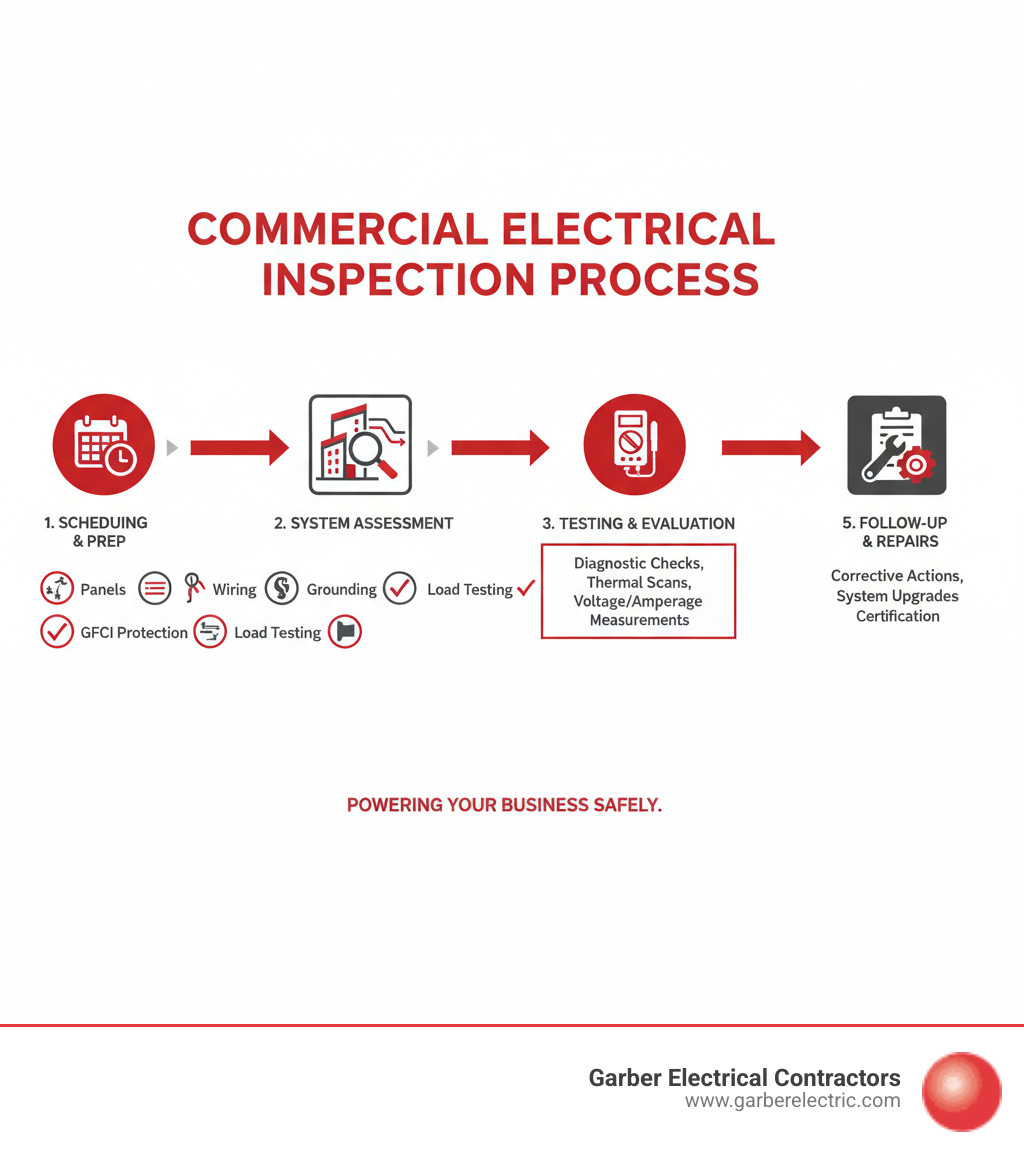
We’ve designed our commercial electrical inspection process to be straightforward, thorough, and minimally disruptive. Here’s what to expect from start to finish.
Scheduling the Inspection
It starts with a call or email to our team. We’ll work with you to find a convenient time for your business operations. We serve businesses throughout Dayton, Columbus, the Miami Valley, and across Ohio, Kentucky, and Indiana, so we can get to you quickly.
The Initial Walk-Through
When our licensed electrician arrives, they begin with an initial walk-through to understand your system’s layout, age, and overall condition. This is the perfect time to point out any specific concerns you have, such as flickering lights or non-working outlets. This visual survey helps us identify obvious issues and areas needing special attention.
System Assessment and Testing
This is the most detailed phase. Our inspector methodically tests critical components, conducting voltage level testing, verifying circuit breakers trip correctly, and ensuring GFCI/AFCI devices are functional. We assess your system’s load to prevent overloads and check everything against current NEC and local safety standards, including crucial grounding and bonding systems.
Identification of Issues
As we work, we document every concern, from minor issues like a loose connection to serious hazards like an overloaded panel or signs of overheating. We believe in clear, honest communication and will explain what we find, why it matters, and the potential consequences if it’s not addressed—all in straightforward terms.
Issuing the Report
After the inspection, we compile a comprehensive written report. This document clearly explains our findings, organizing issues by severity. Critical safety hazards are clearly marked, along with code violations and recommended improvements. Each item includes its location, a description of the problem, and our recommendation for fixing it.

Repairs and Follow-Up
Finding problems is only half the job. We’ll review the report with you, explain your options, provide clear pricing, and help prioritize repairs. Our skilled electricians can handle everything from simple fixes to major upgrades, scheduling the work to minimize disruption. Once complete, we can conduct a follow-up inspection to verify that your system is fully compliant and safe.
How to Prepare for Your Commercial Electrical Inspection
A little preparation helps your inspection go smoothly:
- Clear access to panels and equipment: Move any items blocking electrical panels or equipment. Inspectors need at least 30 inches of width and 36 inches of depth in front of panels.
- Gather relevant documentation: Previous inspection reports or permits for recent electrical work provide valuable context.
- Review your system for obvious issues: Note any flickering lights, non-working outlets, or unusual sounds or smells to share with the inspector.
- Notify tenants or staff: Let people know an inspection is happening to prevent surprises and ensure access to all areas.
- Be prepared for potential costs: Proactively addressing issues found during an inspection is always less expensive than dealing with an emergency failure or shutdown.
Understanding Inspection Types and Frequency
Different situations call for different types of electrical inspections. Let’s break down what you need to know.
The Three Main Types of Inspections
Rough-in inspections happen during construction or major renovations before walls are sealed. This is the last chance to catch wiring and installation problems before they become expensive to fix.
Final inspections occur when construction is complete but before the space is occupied. We verify the entire system—outlets, fixtures, panels—is safe, functional, and ready for business.
Annual or periodic inspections are the ongoing maintenance checks every existing building needs. At a minimum, you should schedule these once a year. During these commercial electrical inspections, we review the entire system to catch wear and tear, identify emerging hazards, and ensure you remain compliant with current codes.
When You Need an Inspection Right Now
While yearly inspections are essential, some red flags require immediate attention. Your electrical system is warning you of a problem when you notice flickering lights, burning smells, sparks from outlets, or strange buzzing sounds. Don’t ignore these signs.
An inspection is also wise after a significant power outage to ensure your system wasn’t damaged. New installations or major renovations always require an inspection to ensure everything integrates safely and meets code. Finally, be aware of local regulations, as municipalities across Ohio, Kentucky, and Indiana may have their own specific requirements.
Make Annual Inspections Your Business Habit
Here’s the bottom line: every commercial property should have at least one commercial electrical inspection every year. This is the minimum frequency to stay safe and compliant. Your electrical system ages, components wear down, and codes get updated. What passed inspection five years ago might not meet today’s standards. Annual inspections catch these changes before they create fire risks or power failures. The cost of one inspection is minimal compared to emergency repairs, business shutdowns, or dealing with an electrical fire.
After the Inspection: Your Report and Next Steps
Once your commercial electrical inspection is complete, we’ll provide you with a comprehensive report. This document is your roadmap to ensuring your business’s electrical safety and compliance.
Consequences of Failing an Inspection
Failing a commercial electrical inspection or neglecting to address identified issues has serious consequences:
- Fines and Penalties: Non-compliance with electrical codes can lead to significant fines from local authorities.
- Business Shutdowns: In severe cases, authorities may issue a stop-work order or mandate a shutdown until hazards are resolved.
- Insurance Claim Denial: If an electrical fire occurs due to an unaddressed issue, your insurance provider might deny your claim.
- Legal Liability: Should an injury occur due to a preventable electrical hazard, your business could face serious lawsuits.
Understanding the Commercial Electrical Inspection Report
Our detailed report is your guide to action:
- Reading the Report: The report will summarize findings and detail issues for each part of your system, using clear language and photos where needed.
- Deficiency Classifications: Issues are classified by severity. A “critical hazard” requires immediate attention, while a “recommendation” might be a suggested upgrade.
- Recommended Actions: For each deficiency, we provide clear, actionable recommendations for repair or replacement and explain why it’s necessary.
- Timeline for Corrections: We’ll discuss a realistic timeline for addressing critical issues to keep your business safe and compliant.
- Next Steps for Addressing Violations: We guide you through the entire repair process, from obtaining permits to scheduling a follow-up inspection to verify the corrections.
Conclusion: Ensure Your Business is Safe, Compliant, and Powered for Success
Your electrical system works quietly behind the scenes every single day, powering everything that keeps your business running. When it’s working well, you barely notice it. But when something goes wrong, the consequences can be devastating.
That’s why commercial electrical inspections matter so much. They’re not just another box to check or a regulatory requirement to grudgingly fulfill. They’re your best defense against electrical fires, unexpected shutdowns, costly repairs, and safety hazards that could harm your employees or customers.
Think of regular inspections as preventive maintenance for the backbone of your business. They give you peace of mind knowing your electrical system is safe and up to code. They ensure compliance with the National Electrical Code and local regulations, protecting you from fines, penalties, and potential legal liability. And they’re fundamentally about proactive maintenance – catching small issues before they become expensive emergencies.
The benefits extend beyond just avoiding disasters. A well-maintained electrical system runs more efficiently, potentially lowering your energy bills. It maintains your operational uptime, keeping your business running smoothly without unexpected interruptions. And it protects the people who matter most – your team and your customers.
We’ve seen too many businesses face avoidable crises because they put off inspections or ignored warning signs. Don’t let that be your story.
At Garber Electrical Contractors, we’re committed to being more than just your electrical service provider. We’re your partner in keeping your commercial property safe, compliant, and ready for whatever comes next. Our licensed electricians bring expertise, thoroughness, and a genuine commitment to protecting your business.
For trusted and dependable service in Dayton, Columbus, and the Miami Valley, Garber Electrical Contractors provides comprehensive solutions custom to your specific needs. We’re here when you need us, ready to ensure your business stays powered for success.
Contact us for your electrical service needs and let’s schedule your inspection today.