
Why Getting the Right Generator Wattage Matters
How many watts for a whole house generator depends on what you need to power, but here’s the quick answer:
Quick Generator Sizing Guide:
- Essentials Only (8-12 kW): Refrigerator, lights, sump pump, furnace fan, Wi-Fi
- Partial Home (12-17 kW): Essentials plus microwave, water heater, washer
- Most Homes (15-20 kW): Full home comfort including central AC and major appliances
- Larger Homes (20-48 kW): Entire house including electric dryer, EV chargers, multiple HVAC zones
The calculation: Add up your appliances’ running watts, then add the single highest starting watts (usually your AC or well pump), plus a 15-20% safety buffer.
When the lights go out unexpectedly, life doesn’t just pause—it stops. Your refrigerator warms up. Your sump pump quits working. If someone in your home relies on medical equipment, a power outage becomes more than an inconvenience.
The right whole house generator keeps your home running through storms, grid failures, and unexpected outages. But here’s the catch: get the size wrong and you’re either left with a generator that can’t handle the load or one that wastes fuel and money.
Undersized generators overload, overheat, and can damage both the unit and your appliances. Oversized generators cost more upfront and waste fuel running inefficiently. The sweet spot is sizing your generator precisely to your home’s actual needs.
This guide walks you through the exact process professional electricians use to determine generator wattage—from understanding starting versus running watts to calculating your home’s total electrical load. Whether you want to power just the essentials or keep every system running seamlessly, you’ll know exactly what size generator fits your lifestyle.
How many watts for a whole house generator terms simplified:
Understanding Generator Power: Starting vs. Running Wattage
To accurately determine how many watts for a whole house generator you need, it’s crucial to grasp the difference between running wattage and starting wattage. This distinction is the cornerstone of proper generator sizing.
Running Wattage (Continuous Power): This is the power an appliance consistently draws to operate once it’s already on and functioning. Think of a light bulb, a TV, or a running refrigerator. These devices have a steady power requirement. Summing up the running wattage of all the appliances you want to power simultaneously gives you a baseline for your generator’s continuous output.
Starting Wattage (Surge Power): Here’s where things get a little more complex, especially for appliances with motors or compressors. When these devices first kick on, they require a brief, much higher burst of power to get going. This initial surge of electricity is known as starting wattage, or surge power. It can be anywhere from two to three times their running wattage. Once they’re up and running, their power demand drops back down to their running wattage.
Consider common household items:
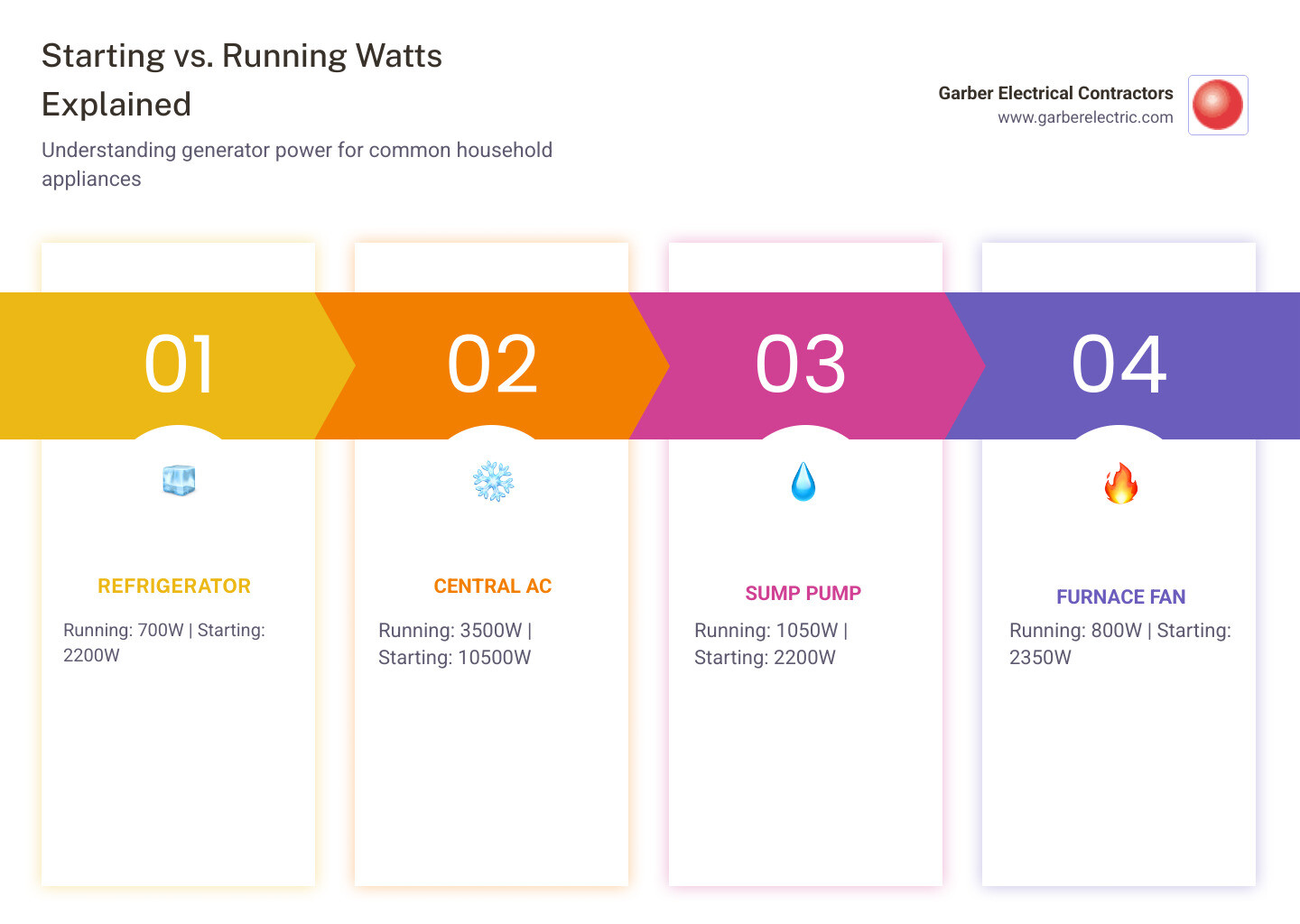
- HVAC systems: Your central air conditioner or furnace fan, essential for comfort in Ohio’s fluctuating weather, will have a significant starting wattage. A central AC unit, for instance, might run at 3,500 watts but demand up to 10,500 watts to start.
- Refrigerators: While they run continuously at a relatively low wattage, the compressor cycles on and off, each time requiring a surge. A refrigerator running at 700 watts could need 2,200 watts to start.
- Sump pumps: Critical for many homes in our service areas of Ohio, Kentucky, and Indiana, especially during heavy rains, a sump pump (½ HP) might run at 1,050 watts but need 2,200 watts to start.
The impact of this difference on generator sizing is profound. If your generator can only handle the running wattage of your appliances, it will likely trip a breaker or even sustain damage when a motor-driven appliance tries to start up. That’s why your generator needs enough capacity to handle the highest single starting wattage of any appliance you plan to use, in addition to the combined running wattage of everything else that will be on at the same time.
How to Calculate the Wattage Your Home Needs
Calculating the total wattage needed for your home might seem daunting, but we’ve broken it down into a straightforward, step-by-step process. This methodical approach ensures you don’t overlook any crucial power demands, helping you find the ideal generator size.
-
Create an Appliance Inventory: Grab a pen and paper, or open a spreadsheet. Walk through your home, room by room, and list every single appliance and device you want to power during an outage. Be thorough! Don’t forget things like garage door openers, well pumps, sump pumps, and medical equipment.
-
Find Wattage Ratings for Each Appliance: This is where you gather the specific power requirements.
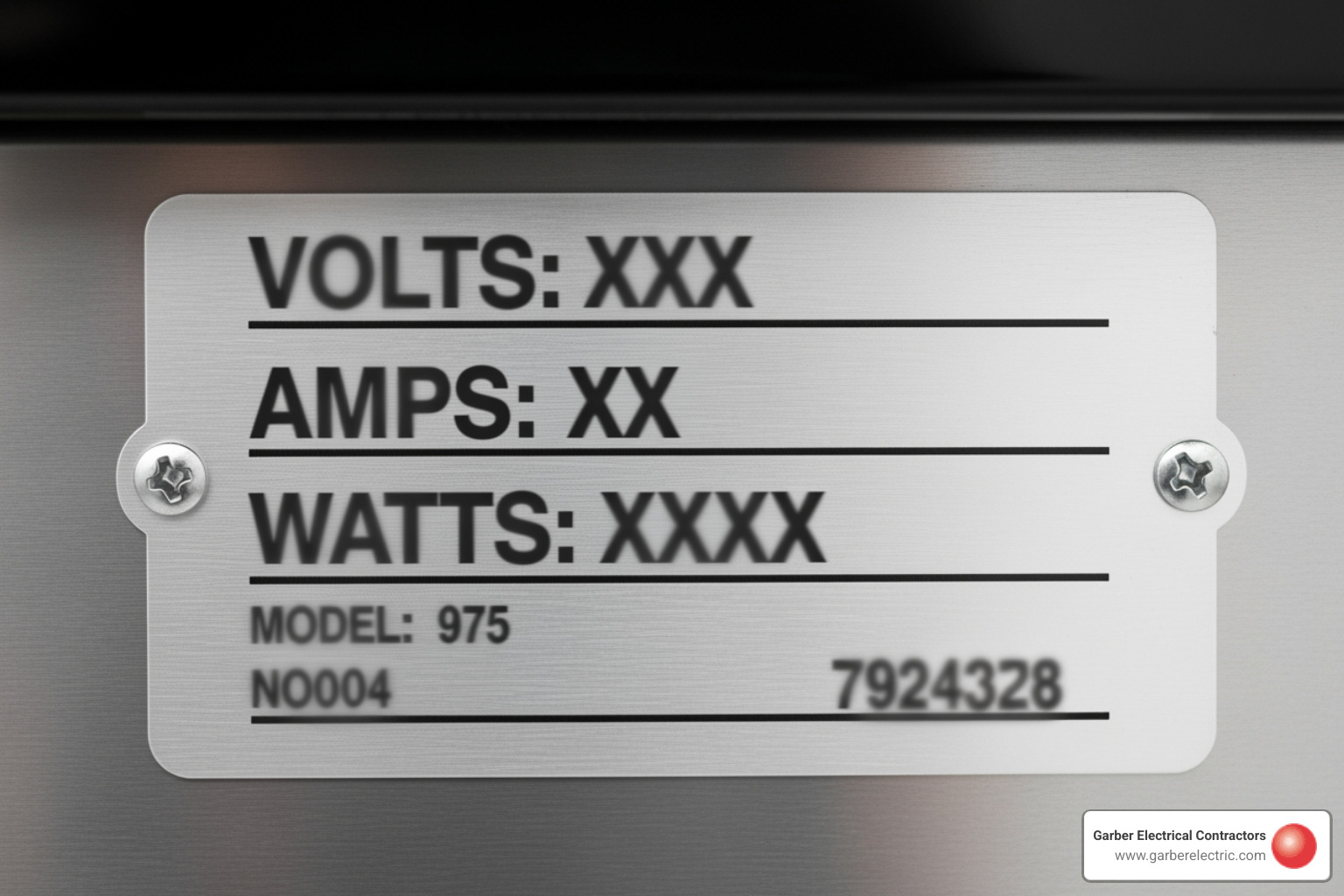
- Appliance Labels/Manuals: Many appliances have a sticker or data plate, usually on the back or bottom, that lists their wattage (W), amperage (A), and voltage (V).
- Online Resources: If you can’t find the label, a quick online search for your appliance’s make and model can often yield its wattage specifications. You can also use a general wattage estimation guide as a reference for common appliances.
- Calculation: If you only find amperage (A) and voltage (V), you can calculate wattage using the formula: Wattage (W) = Amperage (A) x Voltage (V). (e.g., 120V x 5A = 600W).
-
Separate Running and Starting Wattage: For each item on your list, note both its running wattage and, if applicable, its starting wattage. Appliances with motors (like refrigerators, freezers, air conditioners, and furnace fans) will have a higher starting wattage. Appliances like lights, TVs, and coffee makers typically only have a running wattage.
-
Total Your Running Watts: Add up the running wattage of all the appliances you plan to use simultaneously during an outage. This gives you your total continuous power requirement.
-
Identify the Single Highest Starting Wattage: Look at your list and find the appliance that has the highest starting wattage. This is crucial because your generator needs to be able to handle this peak demand when that specific appliance kicks on.
-
Calculate Your Minimum Generator Wattage: Add your total running watts (from step 4) to the highest single starting wattage (from step 5).
- Example: If your combined running watts are 5,000W, and your central air conditioner has the highest starting wattage at 7,000W (while other items are already running), your minimum required wattage would be 5,000W + 7,000W = 12,000W.
-
Add a Safety Buffer: We always recommend adding a safety buffer of 15% to 25% to your calculated minimum wattage. This buffer accounts for unforeseen power surges, minor inaccuracies in wattage ratings, or the possibility of adding a new device in the future. For our example above, 12,000W + 20% (2,400W) = 14,400W. So, a generator with at least 14.4 kW capacity would be a good starting point.
While you can perform these calculations yourself, a DIY wattage estimate is just that—an estimate. For the most accurate and safe sizing, we recommend using an online wattage calculator as a preliminary step, and even better, having a professional electrician from Garber Electric perform a precise load calculation for your home. This ensures we account for all variables and local electrical codes specific to Ohio, Kentucky, or Indiana.
How Many Watts for a Whole House Generator: Sizing for Your Lifestyle
Determining how many watts for a whole house generator ultimately comes down to your personal power priorities and lifestyle needs during an outage. Do you want to simply keep the lights on and the fridge cold, or do you expect to maintain full home comfort, including air conditioning and electric cooking?
Understanding your power priorities helps us recommend the right generator solution for your home in Lewis Center, Columbus, or anywhere in Central Ohio. We offer a range of Whole House Generator Solutions for Your Home designed to meet various demands.
How many watts for a whole house generator to power just the essentials?
For many homeowners, the goal during an outage is to cover the bare necessities. This means keeping critical systems operational to ensure safety and prevent major inconveniences. If this sounds like you, you’re looking for a generator in the 8 kW to 12 kW range.
Essential appliances typically include:
- Refrigerator/Freezer: To prevent food spoilage.
- Lights: A few key lights in living areas and bathrooms.
- Sump Pump: Crucial for preventing basement flooding, especially in areas prone to heavy rainfall.
- Furnace Fan: To circulate heat if you have a gas furnace (the fan requires electricity, but the gas heat itself doesn’t).
- Medical Equipment: Any life-sustaining devices.
- Modem/Router: For essential communication and internet access.
- Charging Stations: For phones and other small devices.
A generator in this range can keep these vital items running, ensuring comfort and safety without powering everything. For instance, an 8 kW unit can cover basic needs like lights, refrigerator, and chargers. If you only need to power select circuits, an 8 kW to 12 kW generator is usually sufficient. To get a more precise estimate for your specific “essentials,” our detailed guide on How to Size a Whole House Generator can walk you through the process.
Common Essential Appliances and Their Wattage Needs:
- Refrigerator: 700W running, 2200W starting
- Lights (LED): 10W-60W per bulb
- Sump Pump (1/2 HP): 1050W running, 2200W starting
- Furnace Fan (1/2 HP): 800W running, 2350W starting
- Television: 100W-350W
- Computer/Wi-Fi: 500W-2000W
How many watts for a whole house generator to power your entire home?
If you envision an outage as merely a temporary blip, with no disruption to your daily routine or comfort, then powering your entire home seamlessly is your goal. This means a larger whole house generator, typically ranging from 15 kW to 48 kW or more, depending on your home’s size and electrical demands.
With a whole-home generator of this capacity, you can continue to use:
- Central Air Conditioning: Maintain indoor climate control, a must during hot Ohio summers or cold Kentucky winters.
- Electric Stoves/Ovens: Cook meals without interruption.
- Water Heaters: Enjoy hot showers and clean dishes.
- Washing Machine and Dryer: Keep up with laundry.
- Multiple Entertainment Systems: TVs, gaming consoles, home theaters.
- EV Chargers: If you have an electric vehicle, you can even charge it during an outage.
For a typical 1,500-square-foot home, a generator size usually falls between 8 kW and 22 kW. However, if you want to power just about everything in your home, including central AC and larger electric appliances, you’d likely want at least a 20 kW to 22 kW unit. For larger homes or those with significant electrical demands like multiple HVAC zones, EV chargers, or electric furnaces, units up to 35 kW or even 48 kW might be necessary.
Many homeowners in Ohio, Indiana, and Kentucky trust brands like Kohler for reliable backup power. We’ve seen Why More Ohio Homeowners Trust a Kohler Whole House Generator for Reliable Backup Power—they offer robust solutions that can handle even the most demanding whole-home power needs.
Key Factors That Influence Your Generator Size
Beyond just counting appliances, several other critical factors play a significant role in determining how many watts for a whole house generator you truly need. These elements contribute to your home’s overall electrical load and must be considered for accurate sizing.
-
Home Size (Square Footage): Generally, larger homes tend to have more appliances, more lighting, and often larger HVAC systems, which naturally increases power demand. While not a direct correlation, a 1,000 sq ft home will likely need less power than a 3,000 sq ft home. For instance, a 7.5–9 kW generator might suffice for homes under 1,000 sq ft, while homes over 5,000 sq ft could require 37–48+ kW.
-
Energy Efficiency: A home with modern, energy-efficient appliances and good insulation will naturally have a lower overall power demand than an older home with less efficient units. Investing in energy-efficient appliances can sometimes allow for a slightly smaller generator.
-
HVAC Systems: This is often the single biggest factor. Central heating and air conditioners use more electricity than almost any other device in a home, especially during startup. The size and type of your HVAC system (e.g., heat pump vs. natural gas furnace with an electric fan) will heavily influence your generator’s wattage requirements. If you have a large central AC unit, it will likely dictate the minimum starting wattage your generator needs to handle.
-
Gas vs. Electric Appliances: Homes with electric stoves, electric water heaters, and electric clothes dryers will require significantly more generator power than homes with gas equivalents. For example, an electric oven can demand 5,000 watts, while a gas oven primarily needs power for its igniter and controls.
-
Climate Considerations: Our service areas in Ohio, Kentucky, and Indiana experience a wide range of temperatures. During sweltering summers, central AC runs almost constantly, demanding high power. In freezing winters, heating systems are essential. These extreme weather conditions mean higher, sustained power demands, which must be factored into your generator size. Why Columbus Ohio’s Unpredictable Weather Makes Home Standby Generators a Smart Investment highlights how crucial reliable backup power is in our region.
-
Outage Frequency and Duration: If you live in an area prone to frequent or prolonged power outages, you might lean towards a larger generator to ensure continuous comfort and functionality, rather than just covering essentials for a few hours.
Considering these factors holistically helps us provide a solution that is not only appropriately sized but also robust enough to meet your unique needs in our local climate.
Risks, Safety, and Why Professional Sizing is Best
Choosing the right generator size isn’t just about convenience; it’s about safety, efficiency, and protecting your investment. There are significant risks associated with getting the wattage wrong, and safety considerations are paramount when operating any generator.
Risks of Incorrect Sizing:
-
Undersized Generator: If your generator is too small for your home’s needs, it can lead to:
- Overloading: The generator will struggle to meet demand, potentially tripping circuit breakers frequently.
- Damage to Appliances: Inconsistent power delivery can harm sensitive electronics and motor-driven appliances.
- Generator Damage: Overworking the generator can lead to premature wear, overheating, and costly malfunctions. It could even “fry” the generator.
- Lack of Power: You simply won’t be able to power all the devices you need, leaving you in the dark for critical functions.
-
Oversized Generator: While it might seem safer to go bigger, an oversized generator also has drawbacks:
- Inefficiency: Generators operate most efficiently when running at a significant portion of their capacity. An oversized unit running a small load will consume more fuel than necessary, wasting resources and increasing operating costs.
- Higher Upfront Cost: You’ll pay more for a larger unit that you don’t fully use.
Safety Considerations:
Generators, particularly portable ones, produce carbon monoxide – an invisible, odorless, and deadly gas. That’s why it’s critical to understand how to safely use an emergency generator. Never operate any generator indoors, including garages or enclosed spaces. Always place it outdoors, far from windows, doors, and vents, typically at least 20 feet from your home.
For whole house generators, proper installation and integration are key to safety. This includes a crucial component: the automatic transfer switch (ATS). An ATS safely disconnects your home from the utility grid before connecting to the generator, preventing dangerous “backfeeding” of electricity into the utility lines, which can injure utility workers.
Why Professional Sizing is Best:
Given the complexities of running vs. starting wattage, load management, and the critical safety aspects, we strongly recommend professional help for calculating your home’s wattage needs and selecting a generator. Our certified electricians at Garber Electric can:
- Perform a Detailed Load Calculation: We carefully assess your home’s electrical panel and appliances, accounting for all running and starting wattages, and applying appropriate safety buffers. This goes beyond a simple DIY estimate.
- Ensure Code Compliance: Generator installation is subject to strict local electrical and gas codes in Ohio, Kentucky, and Indiana. We ensure your system is installed safely and legally.
- Integrate Automatic Transfer Switches: We install the necessary ATS to ensure seamless, safe, and automatic power transfer during an outage.
- Provide Expert Recommendations: Based on your exact needs, lifestyle, and budget, we guide you to the optimal whole house generator model.
Choosing the right size is an investment in your home’s safety and comfort. And once installed, regular Standby Generator Maintenance is vital to ensure it’s always ready when you need it most.
Frequently Asked Questions About Whole House Generator Sizing
We understand that investing in a whole house generator brings many questions. Here are some of the most common inquiries we receive regarding generator sizing and related topics.
What’s the difference between a portable and a whole-house generator?
The core differences lie in their power output, installation, and operation.
- Portability: As their name suggests, portable generators are designed to be moved. They usually have wheels and handles, making them suitable for camping, tailgating, or powering tools on a job site. Whole-house generators, also known as standby generators, are large, stationary units permanently installed outside your home.
- Power Output: Portable generators typically offer lower wattage, ranging from 1,000 to 10,000 watts, enough for a few essential appliances. Whole-house generators are significantly more powerful, commonly ranging from 8,000 watts (8 kW) up to 48,000 watts (48 kW) or more, designed to power most, if not all, of your home.
- Fuel Types: Portable units often run on gasoline, requiring manual refueling. Whole-house generators usually connect directly to your home’s natural gas line or a dedicated liquid propane (LP) tank, providing a continuous fuel source.
- Installation: Portable generators are “plug-and-play” (with proper extension cords and safety precautions). Whole-house generators require professional installation, including connection to your home’s electrical system and fuel source, often involving a concrete pad and a transfer switch.
- Automatic Operation: This is a major distinguishing factor. Whole-house generators are equipped with an automatic transfer switch. When utility power fails, the generator senses it, starts automatically, and transfers power to your home. When utility power returns, it switches back and shuts down. Portable generators require manual setup, starting, and connecting.
- Transfer Switch Integration: For safety, a portable generator should be connected via a manual transfer switch installed by an electrician. A whole-house generator integrates seamlessly with an automatic transfer switch, making the process effortless and safer.
For a deeper dive into the options, our guide Your Guide to Buying a Whole House Backup Generator provides comprehensive information.
Can a standby generator increase my home’s value?
Yes, absolutely! A professionally installed standby generator can be a significant asset and often increases your home’s value.
- Resale Value and Buyer Appeal: In areas like Columbus, Dayton, and Central Ohio, where unpredictable weather can lead to power outages, a whole house generator is a highly attractive feature for potential buyers. It signals that your home is prepared, secure, and offers continuous comfort.
- Power Security: Buyers are increasingly looking for homes that offer resilience against disruptions. A generator provides peace of mind, knowing that essential systems (like heating, cooling, and refrigeration) will remain operational.
- Market Trends: As extreme weather events become more common, the demand for reliable backup power solutions grows. Homes equipped with standby generators stand out in the market.
It’s an investment that not only provides immediate benefits for your family’s comfort and safety but also adds tangible value to your property. Learn more about How Whole House Generators Add Value to Your Home in Central Ohio.
Do I need a permit to install a standby generator?
Yes, almost always. Installing a standby generator is a significant home improvement project that involves working with both electrical and, typically, gas lines. As such, it requires permits from your local city or county authority in Ohio, Kentucky, or Indiana.
- Local Regulations: Permit requirements can vary slightly depending on your specific municipality (e.g., Lewis Center, Englewood, Westerville). These permits ensure that the installation adheres to strict safety standards and building codes.
- Electrical Permits: These cover the wiring of the generator to your home’s electrical system, including the installation of the automatic transfer switch.
- Gas Permits: If your generator connects to a natural gas line or a propane tank, a gas permit will be required to ensure proper and safe fuel line installation.
- Professional Installation: This is where working with a qualified professional like Garber Electric becomes invaluable. We handle all the necessary paperwork, ensure compliance with all local codes, and manage the inspection process for you. This saves you time, prevents potential headaches, and most importantly, ensures the safety and legality of your installation.
Understanding these factors is one of the 3 Factors to Keep in Mind Prior to Installing a Whole House Generator.
Secure Your Home’s Power with the Right-Sized Generator
Determining how many watts for a whole house generator is a critical step in safeguarding your home and family against power outages. We’ve explored the nuances of running and starting wattage, walked through the calculation process, and highlighted the many factors that influence your final decision. The goal isn’t just to buy a generator; it’s to invest in peace of mind, knowing that your home will remain comfortable, safe, and functional when the grid goes dark.
The importance of accurate sizing cannot be overstated. An undersized generator will leave you frustrated and vulnerable, while an oversized one will be an inefficient drain on your resources. The sweet spot is a generator that precisely matches your household’s unique electrical demands, ensuring seamless power without unnecessary expense.
While you can begin with your own estimates, the complexities of electrical loads, safety standards, and local codes in Ohio, Kentucky, and Indiana make professional assessment invaluable. Our team at Garber Electric brings expert knowledge and experience to every project. We’ll perform a meticulous load calculation, guide you through the best options for your lifestyle and home, and ensure a safe, compliant installation.
Don’t leave your home’s power security to chance. Let our expertise light the way.
Ready to ensure your home is never left in the dark? Contact us to learn more about whole house generators and get a professional assessment custom to your needs.